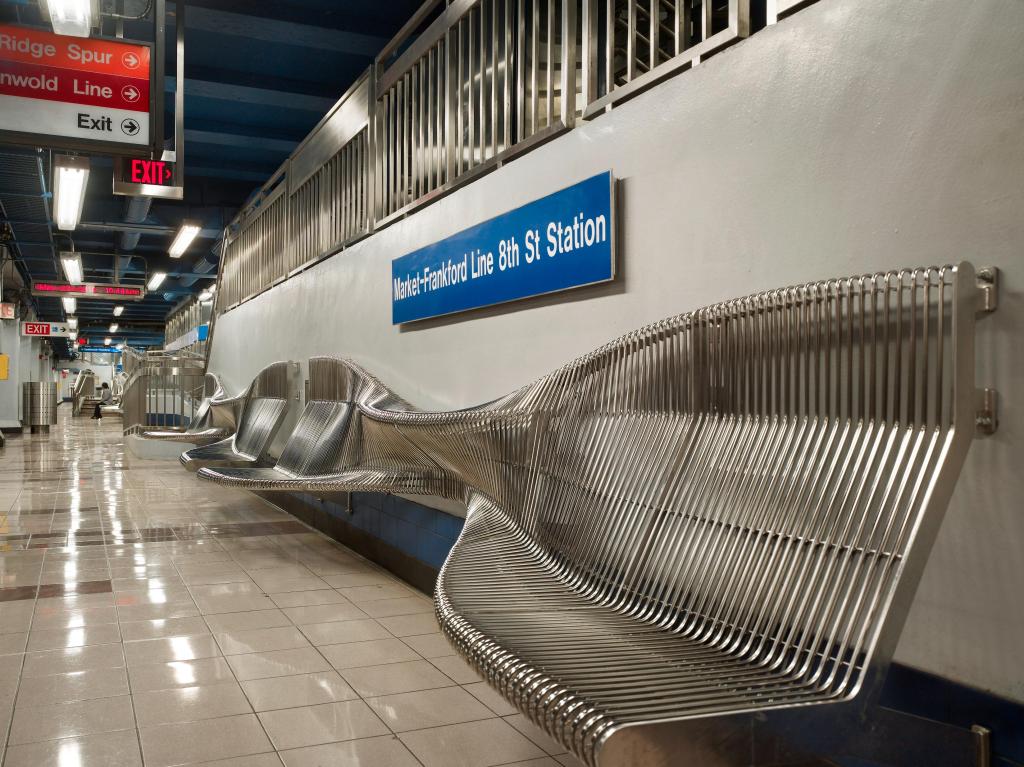
If you came across a stray cat resting on a park bench, would you forcibly remove it, even if you had been wandering for hours and just wanted a moment to rest your legs? Personally, I wouldn’t. Unlike the cat, I’m fortunate enough to have a home where I can recharge. The least I can do is allow the cat to have the bench. A comparable situation has long been a concern in New York City. Homeless individuals frequently seek refuge on Central Park benches, Grand Central floors, or even the sides of busy streets. However, with subtle alterations to ostensibly public spaces, these individuals are being pushed out of the city. Some applaud these unwelcoming measures, while others rightly criticize the blatant targeting of vulnerable groups. In a New York Times article titled “Hostile Architecture: How Public Spaces Keep the Public Out” by Winnie Hu, the author describes controversial additions to various public spaces in the city. These include small spikes on low walls to discourage unwanted guests, rails on benches making them impossible to lie down on, and a conspicuous lack of chairs and tables that signal “don’t hang out here.”
In an article on The Collector’s website titled “The Value of Public Space: What is Hostile Architecture?” by Joseph T F Roberts, the author details these deterrents and introduces an example known as “the mosquito.” This defensive technology emits high-pitched noises that only young people can hear to deter loitering. Other tactics include periodic sprinklers to drive people away, anti-homeless spikes, and more. While not all hostile architecture is as extreme as “the mosquito,” this technology encourages advancements in the field. If this trend continues, nobody may feel safe on the streets, not just loiterers, skateboarders, or vagrants. In Hu’s article, actress Mia Wagner raises a valid question about anti-loitering signs: “At what point am I loitering?” This simple question, with only a vague answer, leads to another concern—how will rising hostile architecture technology determine who is loitering when humans cannot? Will someone waiting a little too long for their significant other be sprayed by a sprinkler? Will a child playing outside be poked by anti-homeless spikes? These unfortunate but plausible scenarios lead to the conclusion that we must reconsider advancing hostile architecture. Soon, it will no’t only be the vulnerable who are impacted but also the innocent.
As mentioned earlier, some people support these aggressive changes. Proponents argue that hostile architecture provides more benefits than drawbacks. They believe that by preventing loitering, sleeping, or skating in public spaces, these changes bring order and safety. While there’s something to be said about the order hostile architecture might bring, excluding a vulnerable population, the homeless, doesn’t establish true order. The Age of Enlightenment, starting around 1685, brought forth ideas centered around human happiness, the pursuit of knowledge, and natural rights. Natural rights, the idea that everyone has certain rights simply by being born, include the right to personal beliefs, freewill, and the right to live. However, changes in architecture hinder the homeless from living. Despite the intentions to improve New York City, hostile architecture is deemed unethical, and a more considerate approach is needed to clean the streets and aid the homeless.
In conclusion, the ethical implications of hostile architecture in response to societal issues, especially homelessness, warrant critical consideration due to its complexities. While some argue that hostile architecture brings order and safety to public areas, these measures exacerbate the struggles of the vulnerable without addressing the root of the problem. In context of Enlightenment ideals that shaped our understanding of human rights, it is imperative to rethink the trajectory of hostile architecture in a way to accomplish the peacefulness we desire but not at the expense of the unfortunate. It is through ethical considerations and a commitment to shared humanity that we can truly build ethical cities that stand the test of time, think about it.
 Think About It
Leave a comment